Winter is hard on a roof. Cold temperatures make shingles brittle. Snow adds weight. Ice backs up under the edges and works its way into places water was never meant to go. A roof that looks fine in September can turn into a real problem by January.
The good news is that most roof damage signs show up long before the first freeze, and you do not need a ladder to find them. A slow walk around your house with your eyes up will tell you most of what you need to know.
Here is what to look for, and what each warning sign actually means.
Why Roof Damage Signs Matter More Before Winter
A small problem in September becomes a big problem in January. That is the short version. Roof damage signs are easier and cheaper to fix in mild weather, when materials seal properly and crews can work safely.
Once winter sets in, three things work against you:
- Cold makes asphalt shingles stiff and more likely to crack
- Snow and ice add hundreds of pounds of weight to a weak spot
- Melting and refreezing pushes water backward, under the shingles
Fixing a roof in December is also harder on the roof itself. Sealant strips need warmth to bond. That is why fall is the window most contractors prefer.
Start With the Shingles
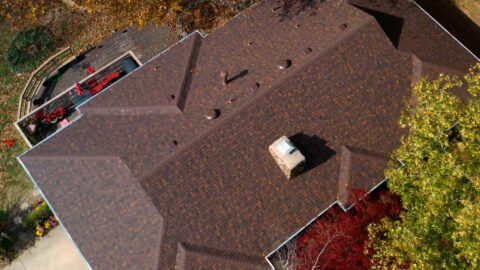
Stand back from the house, ideally across the street, and look at each slope of the roof. You are looking for anything that breaks up the pattern. A healthy roof looks uniform. A tired roof looks patchy.
Watch for:
- Curling or cupping edges, which means the shingle is drying out
- Missing shingles, or bare spots where the underlayment shows through
- Dark patches where the granules have worn away
- Shingles that look wavy or bubbled instead of flat
Granule loss is the one homeowners miss most often. Those tiny stones are what protect the shingle from the sun. Once they are gone, the shingle ages fast.
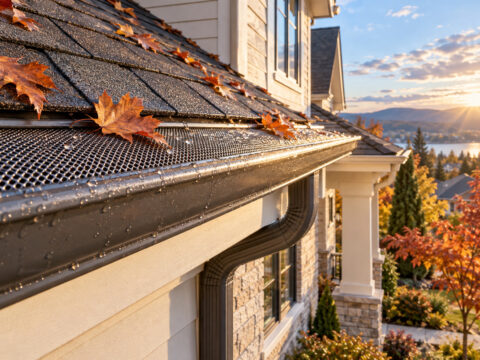
Check the Gutters and Downspouts
Your gutters tell you more about your roof than almost anything else. Take a look at the ground where the downspouts empty out.
If you see what looks like coarse black sand, those are granules washing off your shingles. A little is normal on a new roof. A steady pile on an older roof means the shingles are near the end of their life.
Also check for:
- Sagging gutter sections pulling away from the fascia
- Standing water or plant growth in the trough
- Seams that have separated
- Water stains running down the siding below the gutter
Clogged gutters are the number one cause of ice dams. When water cannot drain, it freezes at the roof edge and pushes new melt back under the shingles.
Look at the Flashing and Roof Edges
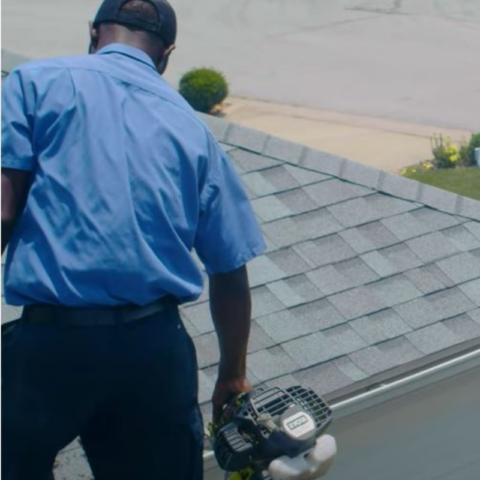
Flashing is the metal that seals the spots where your roof meets something else. Chimneys, vent pipes, skylights, and valleys where two slopes come together. Most leaks do not start in the middle of a roof. They start here.
From the ground, look for:
- Rust or dark streaks on chimney flashing
- Metal that has lifted, bent, or pulled loose
- Missing or cracked sealant around vent pipes
- Debris packed into roof valleys
If you have binoculars, this is where they earn their keep. You can inspect flashing in detail without ever touching a ladder.
Take a Look in the Attic
Your attic is the earliest warning system you have. Pick a bright day and go up without turning on the light. If you see daylight coming through the roof deck, you have a hole. It is that simple.
Other things to check:
- Dark stains or streaks on the wood rafters
- Damp or matted-down insulation
- A musty smell, which often means moisture is present
- Frost on nail tips in cold weather, a sign of poor ventilation
Attic ventilation matters more than most people realize. Warm, trapped air melts snow on the roof surface, which then refreezes at the cold eaves. That is how ice dams form even on a well-built roof.
Watch for Warning Signs Inside Your Home
Some roof problems announce themselves from the ceiling down. If you notice any of these, the water has already been getting in for a while.
Look for:
- Yellow or brown rings on ceilings and upper walls
- Paint that is bubbling or peeling near the top of a wall
- A sudden jump in your heating bill with no other explanation
- Sagging anywhere on the ceiling surface
Do not wait on a stain. Water travels sideways along rafters, so the spot on your ceiling is rarely directly under the leak.
When to Call a Professional
You can spot roof damage signs on your own. Diagnosing them is a different job. If your inspection turns up anything on this list, it is worth having someone look at it before the weather turns.
Call a contractor if you find:
- Any daylight visible from inside the attic
- More than a few missing or cracked shingles
- Sagging in the roofline or ceiling
- Active water stains that are growing
- Damage after a hail or high wind event
A professional inspection also creates something valuable: a written record. If you ever file an insurance claim, documentation showing your roof was inspected and maintained can make a real difference in how that claim is handled.
A Note on Door-to-Door Offers
After any storm, crews show up in neighborhoods offering free inspections. Some are legitimate. Many are not. Be cautious with anyone who:
- Knocks on your door uninvited after a storm
- Pressures you to sign something on the spot
- Asks for a large deposit before work begins
- Cannot show you a local address or proof of insurance
A good rule of thumb is simple. Choose a contractor you went looking for, not one who came looking for you. Established local companies have a reputation to protect and will still be around in five years when you need a warranty honored.
Get Ahead of Winter
Most roofs do not fail all at once. They fail slowly, in small ways, until one hard freeze finds the weak spot. Catching roof damage signs in the fall gives you options. Waiting until winter usually does not.
Set aside twenty minutes this month. Walk the perimeter. Check the gutters. Look in the attic. If everything checks out, you head into winter with peace of mind. If it does not, you have time to fix it the right way.
Dale’s Roofing offers annual inspections and keeps a record of every visit, which gives homeowners documentation to lean on when they need it. If you would rather have a trained eye handle the checklist, we are here when you are ready.