If you’ve ever typed a roofing question into an AI chatbot and gotten a fast, confident answer, you’re not alone. More homeowners are turning to tools like ChatGPT, Gemini, and others to get quick answers about home maintenance—including their roofs.
AI can be a helpful starting point. But when it comes to something as critical as your roof, there’s a big difference between general information and your specific situation. Knowing that difference could save you thousands of dollars.

The Roofing Questions AI Can Actually Help With
Artificial intelligence tools are surprisingly good at explaining roofing concepts in plain language. If you’ve ever felt lost in a conversation with a contractor—or wanted to walk in prepared—AI can help you get up to speed quickly.
Here’s where AI tends to perform well:
- Roofing terms. Words like flashing, fascia, soffit, decking, and ice dam can feel like a foreign language. AI explains these clearly and quickly.
- General timelines. Wondering how long a typical asphalt shingle roof lasts? AI can give you a reasonable ballpark (usually 20–30 years, depending on the product).
- Basic roof maintenance reminders. AI can walk you through general best practices—like keeping gutters clean, trimming overhanging branches, and scheduling regular inspections.
- Questions to ask a contractor. Before your inspection or estimate, AI can help you prep a solid list of questions so you feel informed, not overwhelmed.
- Understanding insurance claims. AI can explain what a typical homeowner’s insurance policy might cover after a storm—though your specific policy will always need a human review.
Used this way, AI is a great research tool. Think of it like a very well-read friend who has read a lot about roofing—but has never actually been on your roof.
Where AI Gets It Wrong—or Just Can’t Know
This is where things get important. AI works from patterns in data. It doesn’t have eyes. It can’t climb a ladder. And it has no idea what’s actually happening on your home.
AI cannot assess your specific roof’s condition. It doesn’t know your shingles are curling on the northwest slope, that your flashing was improperly installed years ago, or that a recent storm left granule loss you haven’t noticed yet. These are the details that determine whether you need a simple repair or a full replacement.
AI may give outdated or generalized information. Building codes vary by location and change over time. Material standards evolve. What was standard practice five years ago may not apply today—and what applies in one region may not apply in yours.
AI can’t tell you if your roof is safe. Structural issues, rot, and hidden water damage don’t show up in a chatbot. A sagging deck or compromised underlayment requires eyes on the problem—and trained eyes at that.
AI doesn’t account for your home’s history. Has your roof been repaired before? Were the repairs done correctly? What materials were used? AI has none of this context. A professional who can review your home’s service records—and actually inspect the current condition—sees the full picture.
A Real Example: When AI Gets Its Sources Wrong
Here’s a story that illustrates the problem perfectly.
A business owner recently had a prospective client tell them their reviews were terrible—because that’s what AI said. The client had asked a chatbot to evaluate the company, and the tool returned a poor rating based on what it found.
The problem? The AI was pulling almost exclusively from Yelp, where the business had fewer than 30 reviews—and a disproportionate number of them were negative. It largely ignored Google and Facebook, where the same company had far more reviews and a much stronger overall rating built on years of happy customers.
The AI wasn’t lying, exactly. It was just working with incomplete information and presenting its conclusion as if it were the full picture.
This happens more than people realize. AI tools don’t always pull from every available source. They may favor certain platforms, miss newer reviews, or weight a small sample too heavily. The result can be a skewed—and unfair—portrait of a company’s actual reputation.
What should you do instead? Check reviews directly. Look at Google, Facebook, and the Better Business Bureau. Pay attention to the volume of reviews, not just the rating. A company with 400 Google reviews at 4.7 stars tells a very different story than one with 18 reviews at 3.2 stars—but AI may not make that distinction clear.
When you’re choosing someone to work on one of your home’s most important systems, that kind of context matters. Don’t let an algorithm make the call for you.
The Real Risk: Trusting AI Without Verifying
Here’s the part most homeowners don’t think about until it’s too late.
AI sounds confident. That’s part of what makes it feel so useful. But confidence isn’t the same as accuracy. AI tools can present incorrect information in the same tone they present correct information—and the average homeowner has no easy way to tell the difference.
When you’re asking about roofing, the stakes are high. A roof protects everything underneath it—your structure, your belongings, your family. Acting on bad information could mean patching a problem that actually needs full replacement, or ignoring damage that’s quietly getting worse every time it rains.
AI is also no defense against bad actors. Storm chasers—contractors who show up uninvited after severe weather—sometimes use urgency and fear to push homeowners into fast decisions. AI can’t help you evaluate a contractor’s credentials, verify their licensing, or tell you whether that company will still be in business six months from now.
The safest approach: use AI to get informed, then bring that knowledge to a conversation with a trusted local professional.
What a Professional Inspection Actually Covers
A trained roofing contractor does what no AI can. They physically inspect every component of your roof—shingles, flashing, gutters, ventilation, decking, and more. They’re looking for problems that aren’t visible from the ground and issues that haven’t caused symptoms yet.
At Dale’s, every inspection is documented. That matters more than most homeowners realize. Detailed records of every visit can be invaluable when filing an insurance claim—especially after storm damage. Having a written history of your roof’s condition, maintained by a certified contractor, gives you something to stand on when it counts.
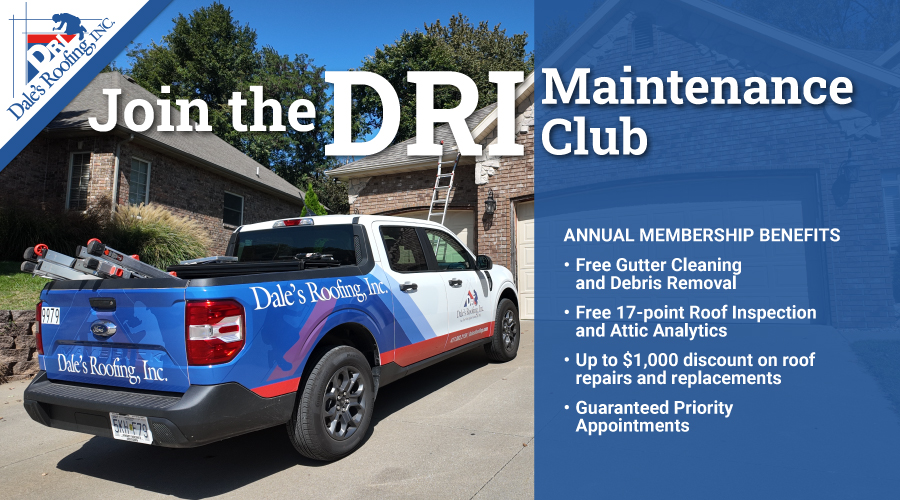
The DRI Maintenance Club—available for less than $200 per year—includes annual inspections, gutter cleaning, repair discounts, and that documented inspection history. It’s one of the most practical investments a homeowner can make, and it fills a gap that AI simply can’t.
Choosing the Right Contractor Matters as Much as Choosing the Right Information
One thing AI might actually get right: recommending that you work with a reputable contractor. But it can’t vet one for you.
Here’s what to look for:
- Established local presence. Companies with deep roots in the community have a reputation to protect.
- Manufacturer certifications. Dale’s is a Platinum Preferred Contractor with Owens Corning—a distinction that reflects both training standards and a commitment to quality installation.
- Workmanship guarantees. A confident contractor stands behind their work, not just the materials.
- No door-to-door solicitation. Reputable companies let you come to them. Be cautious of any contractor who shows up after a storm offering fast inspections and urgency-driven pricing. These storm chasers may fabricate or exaggerate damage—or collect a deposit and disappear.
The right contractor brings accountability, credentials, and a paper trail. AI brings general knowledge and convenience. Both have a role—just not the same one.
That said, it’s important to remember that AI can sound confident while giving you faulty information based on a snapshot view of available data rather than the total aggregate. Always double-check AI answers, particularly when asking for local recommendations.
The Bottom Line
AI isn’t the enemy of good roofing decisions. It’s actually a useful tool when you use it correctly—as a way to get educated, prepare questions, and understand your options. But it should be the beginning of your research, not the end of it.
Your roof is not a generic structure. It’s a specific system on a specific home in a specific climate with a specific history. Only a qualified professional can evaluate it accurately.
If it’s been more than a year since your last roof inspection—or if you’ve recently experienced severe weather—don’t rely on a chatbot to tell you you’re fine. Let a professional take a look. At Dale’s, we make that easy, affordable, and well-documented.
Because when it comes to your roof, what you don’t know can hurt you—and AI doesn’t know what it doesn’t know.
Frequently Asked Questions About AI and Roofing
Can AI tell me if my roof needs to be replaced?
No. AI can explain the general signs that a roof may need replacement, but it cannot evaluate your specific roof’s condition. Only a trained contractor who physically inspects your home can determine whether repair or replacement is the right call.
Is it okay to use AI to research roofing contractors?
AI can be a helpful starting point, but don’t rely on it as your only source. As we covered above, AI doesn’t always pull from every review platform—and the picture it paints may be incomplete or misleading. Always verify a contractor’s reputation directly on Google, Facebook, and the Better Business Bureau.
What questions should I ask a roofing contractor before hiring them?
A few good ones: How long have you been in business? Are you licensed and insured? Do you offer a workmanship guarantee? Are you a certified manufacturer contractor? What does your inspection process include? AI can actually help you build this list—that’s one of the things it does well.
How often should I have my roof inspected?
Most roofing professionals recommend at least once a year, plus after any significant storm. Regular inspections catch small problems before they become expensive ones—and documented inspection records can be a major asset if you ever need to file an insurance claim.
What is a Platinum Preferred Contractor?
It’s a designation awarded by Owens Corning to contractors who meet strict standards for installation quality, training, and customer service. Not every roofing company qualifies. Working with a Platinum Preferred Contractor means you’re getting a higher level of accountability—and access to stronger warranty coverage.
What is a storm chaser, and why should I avoid them?
Storm chasers are contractors—often from out of town—who show up unsolicited after severe weather, offering quick inspections and urgent repair pitches. Some exaggerate or even fabricate damage. Others collect a deposit and disappear. Reputable companies don’t need to chase business. Look for contractors with an established local presence who let you come to them.
What does the Dale’s Roofing Stay DRI Maintenance Club include?
For less than $200 per year, Dale’s Maintenance Club includes annual roof inspections, gutter cleaning, discounts on repairs and replacements, and documented records of every inspection visit. Those records can be especially valuable when filing an insurance claim after storm damage.
Can AI help me file a roofing insurance claim?
AI can give you a general overview of how the claims process works, but it can’t review your specific policy, assess your actual damage, or advocate on your behalf. For that, you need a professional contractor and a direct conversation with your insurance provider.