The most common roofing mistakes aren’t dramatic. They don’t announce themselves with a crash or a sudden flood. They build quietly—an ignored drip here, a skipped inspection there—until what could have been a simple fix turns into a major expense. For homeowners in Springfield and the surrounding Ozarks region, those small decisions add up faster than you might expect.
The good news: every mistake on this list is preventable. Knowing what to watch for—and who to call when you spot it—is half the battle.
Mistake #1: Ignoring Small Leaks
A tiny drip or a faint water spot on the ceiling is easy to dismiss. It doesn’t seem urgent, especially if it only shows up after heavy rain. But small leaks are one of the most common roofing mistakes homeowners make—and one of the most costly to ignore.
Water doesn’t stay where it enters. It travels along rafters, soaks into insulation, and pools in areas you can’t see from inside the home. By the time a stain becomes visible on your ceiling, the damage underneath may already include:
- Rotting roof decking
- Compromised insulation
- Mold or mildew growth
- Weakened structural framing
The longer a leak goes unaddressed, the more expensive the repair becomes. A professional inspection after any significant storm can catch the source early—often when the fix is still minor.

Mistake #2: Hiring a Storm Chaser
After a major storm, door-to-door roofing solicitors often appear across Springfield neighborhoods. They offer fast inspections, cheap repairs, and big promises. These “storm chasers” follow severe weather from market to market, and homeowners who hire them often end up worse off than before.
The risks are real. Storm chasers may:
- Invent or exaggerate damage to file unnecessary insurance claims
- Cause damage during the “inspection” process
- Use low-quality materials that fail within a few years
- Collect a deposit and disappear before work is completed
The safest rule is simple: let established companies come to you through reputation, not solicitation. Dale’s Roofing has been serving Springfield and southwest Missouri since 1986. We don’t knock on doors after storms—we earn business the old-fashioned way, through consistent quality work and long-term relationships with homeowners who trust us.
If someone shows up uninvited after a storm offering to check your roof, you have every right to decline. Call a local contractor you know and trust instead.
Mistake #3: Skipping Gutter Cleaning
Gutters seem like a minor maintenance item—until they cause a major roofing problem. Clogged gutters prevent water from draining properly, and that backed-up water has to go somewhere. Often, it works its way up under the shingles along the eaves, where it can cause:
- Wood rot along the fascia and soffit
- Leaks along the roofline
- Ice dam formation in winter
- Foundation issues as water overflows and pools near the house
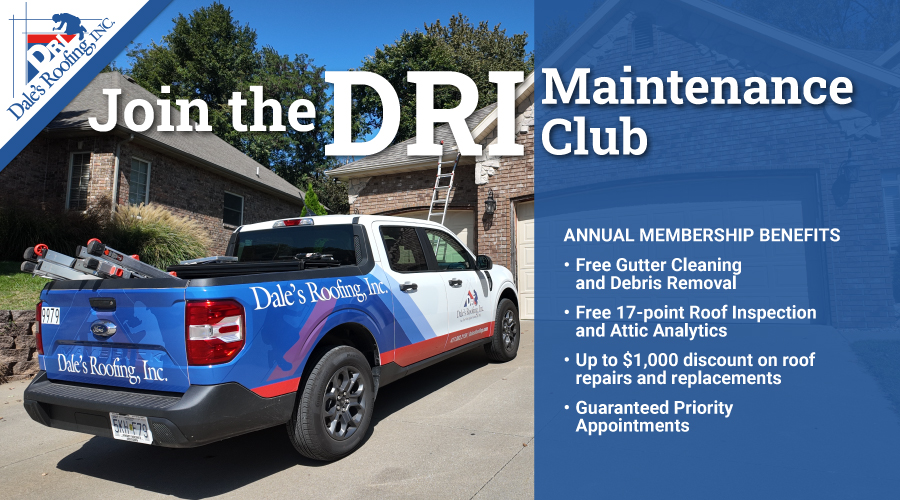
Gutters should be cleaned at least twice a year—once in spring after the last heavy pollen and debris season, and once in fall after the leaves have dropped. For homeowners who want to stop thinking about it altogether, the DRI Maintenance Club from Dale’s Roofing includes annual gutter cleaning, debris removal, and a full roof inspection—all for less than $200 a year.
Mistake #4: Neglecting Attic Ventilation
Most homeowners don’t think about their attic until something goes wrong. But attic health has a direct impact on how long your roof lasts. Poor ventilation traps heat and moisture, and that combination quietly degrades the roofing system from the inside.
The consequences of inadequate attic ventilation include:
- Premature shingle aging from heat buildup in summer
- Warped or rotting roof decking from trapped moisture
- Mold and mildew growth in insulation
- Ice dams in winter, when warm attic air melts rooftop snow that refreezes at the eaves
A properly ventilated attic extends shingle life, reduces energy costs, and prevents a category of damage that’s both preventable and expensive to fix. Dale’s Roofing includes attic inspections as part of its annual maintenance program—because a roof is only as healthy as the system supporting it.
Mistake #5: Skipping Annual Roof Inspections
Roofs don’t fail overnight. The problems that lead to a full replacement usually start small—a few missing granules, a slightly lifted shingle, a bit of loose flashing around a vent. Those issues are inexpensive to fix when caught early. Left undetected, they become the entry points for water intrusion that leads to decking rot, insulation damage, and structural issues.
Annual inspections also matter for insurance purposes. If storm damage occurs and you need to file a claim, documented maintenance history demonstrates that you’ve been a responsible homeowner. Insurers look favorably on that—and it can affect how a claim is processed.
The DRI Maintenance Club provides a detailed inspection report after every visit, with records kept on file. That paper trail exists specifically for moments when an insurance company asks whether your roof has been maintained.
Mistake #6: Attempting DIY Roof Repairs
DIY home improvement has its place—but the roof usually isn’t it. Roofing work involves height, safety risks, specialized materials, and installation techniques that directly affect how well the system performs. Even well-intentioned DIY repairs can:
- Void manufacturer warranties on shingles or underlayment
- Create improper seals that allow water infiltration
- Damage surrounding shingles during the repair attempt
- Miss the actual source of the problem while patching a symptom
Licensed, insured roofing contractors carry the training and accountability that DIY can’t replicate. As an Owens Corning Platinum Preferred Contractor, Dale’s Roofing provides workmanship protection that backs not just the materials, but the quality of the installation itself. If something goes wrong due to installation error, you’re covered—that’s a level of protection a DIY repair simply cannot provide.6. Trying to DIY Roof Repairs
DIY can be fun—just not when it comes to your roof. Even small repairs can be dangerous, and improper materials or techniques can void warranties or create more damage than they fix.
Mistake #7: Waiting Until There’s Obvious Damage to Call a Roofer
Many homeowners operate on a “if it ain’t broke” approach to roofing. The problem is that roofing damage is often invisible until it’s already significant. By the time a leak appears on a ceiling or shingles are visibly missing from the street, the underlying damage has usually been developing for months.
Proactive maintenance—not reactive repair—is what keeps roofs healthy long-term. Scheduling an inspection before storm season, after any major weather event, or on a regular annual basis puts you in a position to address issues on your terms, not under emergency conditions.
Emergency repairs cost more, take longer to schedule, and sometimes require temporary measures that don’t fully protect the home while you wait. Getting ahead of problems is always less expensive than responding to them.
Frequently Asked Questions About Common Roofing Mistakes
How often should I have my roof inspected?
At minimum, once a year—and after any major storm, high wind event, or hail. Annual inspections catch small issues before they become big ones and create the documentation history that helps with insurance claims.
How do I know if I’ve hired a storm chaser?
Storm chasers typically show up unsolicited after a weather event, offer unusually low prices or “free” inspections, and may pressure you to sign quickly. They often lack local business addresses, established reviews, or long-term ties to the community. When in doubt, look up the company’s history before agreeing to anything.
What does the Dale’s Roofing DRI Maintenance Club include?
The DRI Maintenance Club includes an annual roof and attic inspection, gutter cleaning, debris removal, discounts on repairs and replacements, and documented inspection records kept on file. Membership is less than $200 per year.
Can a clogged gutter really damage my roof?
Yes. Backed-up water from clogged gutters can seep up under shingles along the eaves, cause wood rot along the fascia and soffit, and contribute to ice dam formation in winter. Gutter maintenance is directly connected to roof health.
Does DIY roof repair void my warranty?
It can. Manufacturer warranties often require installation by a certified contractor, and improper DIY repairs may void coverage on materials. If you’re considering a DIY fix, check your warranty documentation first—or call a licensed roofer to assess the situation before you start.
What is an Owens Corning Platinum Preferred Contractor?
It’s the highest tier of contractor designation Owens Corning offers, held by fewer than 1% of roofing contractors in the country. Platinum Preferred Contractors are vetted for installation quality and customer satisfaction. The designation unlocks enhanced warranty coverage for homeowners—including workmanship protection that covers installation errors, not just defective materials.

Don’t Let Small Mistakes Become Big Repairs
Every roofing problem on this list starts with something manageable—an ignored drip, a skipped cleaning, a rushed hiring decision. The pattern is the same every time: a small issue, left unaddressed, becomes something much more expensive.
Dale’s Roofing has been helping Springfield and southwest Missouri homeowners avoid these mistakes since 1986. As an Owens Corning Platinum Preferred Contractor, we back our work with the materials, training, and guarantees to stand behind every job. Whether you need an inspection, a repair, or ongoing maintenance through the DRI Club, we’re here—no pressure, no gimmicks, just honest work from a team that will still be in business when you need us next year.